The Ballot is a Housing Issue: How the November 2026 Election Shapes NC Housing Affordability
Voting for Home
At a Glance: Why Your Vote Matters for NC Housing
- The Cost of Living: A single adult in North Carolina needs an annual income of at least $42,190 to cover basic necessities, yet the state minimum wage has remained stuck at $7.25 since 2009
- The Local Rental Gap: In the Charlotte region, a worker must earn approximately $35.08 per hour to comfortably afford a modest two-bedroom rental
- Constitutional Amendments on the Ballot: This November, North Carolina voters will decide on three key state amendments—including a proposed property tax levy limit and an income tax rate cap reduction—both of which carry significant, long-term implications for housing affordability and state revenues
- The Charlotte Housing Bond: Local voters will decide whether to approve a new $125 million Housing Bond to preserve and build affordable homes across the city, building on the progress of the previous $100 million initiative
- Election Day: The North Carolina general election takes place on Tuesday, November 3, 2026
How Much Does It Cost to Afford Housing in North Carolina?
In North Carolina, more than one-third of households cannot afford basic necessities on their current income. A single adult needs to earn at least $42,190 per year, while a family of four (two adults and two children) needs approximately $97,550 annually just to cover expenses such as housing, childcare, food, transportation, and healthcare (Rockfeller Haris, 2025). These figures do not account for savings, emergency expenses, or other necessary costs. North Carolina’s minimum wage remains $7.25 per hour, unchanged since 2009. For example, in the Charlotte-Concord-Gastonia region, a worker must earn approximately $35.08 per hour to afford a modest two-bedroom rental home. At the same time, thousands of households spend more than 50% of their income on housing, far exceeding the commonly recommended affordability threshold of 30% (“Out of Reach 2025”).
Why Is Affordable Housing a Political Issue?

For many residents, housing may seem a question of rent, mortgages, and wages, but in reality, housing is also a political issue shaped by decisions made by elected officials and influenced by the people who choose to vote. One vote from elected officials and voters can influence the next housing investment, tax policy, or affordability decision that decides whether housing becomes a tangible asset for future generations across North Carolina communities.
What Is on the North Carolina Ballot for November 2026?
On Tuesday, November 3, 2026, North Carolina holds its general election. The decision voters make will influence representation, housing policy, property taxes, school funding, city and county budgets and include:
- One U.S. Senate seat
- 14 U.S. House seats
- 1 NC Supreme Court Associate Justice seat
- 3 NC Court of Appeals Judge seats
- 50 NC Senate seats
- 120 NC House seats
- Local judges and district attorneys
- County offices including sheriffs, county commissioners, and Board of Education members
- Municipal elections in select jurisdictions
- Bonds and other local and state ballot referendums
How Do the 2026 NC Constitutional Amendments Affect Housing?
North Carolina voters will also decide on three constitutional amendments that have direct consequences for housing affordability and homeownership across the state. They include:
- The Property Tax Levy Limit Amendment would require the state legislature to pass laws limiting how much property taxes may increase.
- The Reduce Income Tax Rate Cap Amendment would lower the maximum allowable state income tax rate from 7% to 3.5%. Some who oppose the proposal argue that if the state experiences a recession and needs to raise funds, the income tax cap would leave lawmakers with no choice but to increase the sales tax, shifting the tax burden onto lower-income households through higher taxes. This could force the state to remain at the “bottom of the pay scale” for its employees due to the state revenues from taxes being used to cover the state’s future crisis (Baumgartner Vaughan 2026). Others who support the amendment argue that it would lower the tax burden on taxpayers and provide the state with a stronger constitutional safeguard against future income tax increases without voter approval (Pomeraz 2026).
- The Require Voter Identification Amendment would make North Carolina’s photo ID requirement apply to all voters, including those who vote by mail.
Casting that ballot is a civic act for the thousands of households in Habitat Charlotte Region’s service areas, who may be one missed paycheck away from housing instability. For them, it is one of the most direct tools available for protecting the right to remain in the communities they call home.
What Is the 2026 Charlotte Housing Bond?
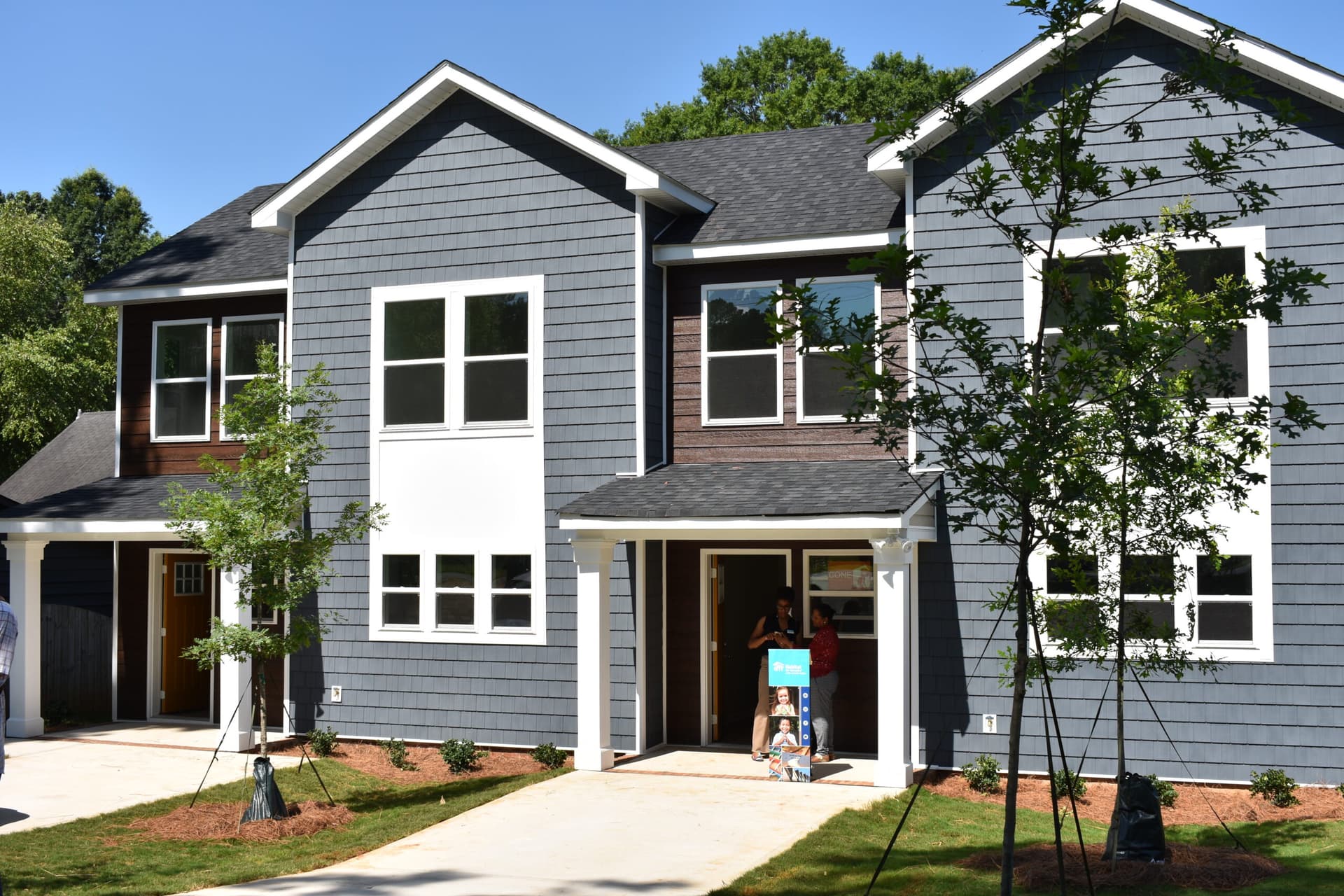
This year, voters will decide whether to approve a $125 million bond and the outcome will fund the City of Charlotte’s Housing Trust Fund; influencing the city’s ability to preserve affordable housing and continue to create affordable homes for years to come.
The ballot this November will do more than elect representatives. It will decide constitutional amendments, approve or reject bonds, and shape policies. In Charlotte, for example, one of the most significant items on the ballot will be the proposed Housing Bond. The previous $100 million bond helped fund affordable housing initiatives across the city. This year, voters will decide whether to approve a $125 million bond and the outcome will influence the city’s ability to preserve and continue to create affordable homes for years to come. The ballot is not just a piece of paper: it will determine whether this region becomes a place where more people can afford to stay.
Reliable Links for Voters
North Carolina Voter Resources: How to Register and Where to Vote
For more information on registering to vote and voting updates click on the link for the county in which you live:
Gaston County Voter Registration
Iredell County Voter Registration
Mecklenburg County Voter Registration
North Carolina law requires voters to show photo identification at the polls. A full list of accepted IDs is available at ncsbe.gov.
For a full and updated list of potential ballot measures, visit: ballotpedia.org/North_Carolina_2026_ballot_measures.
To find the complete list of candidates and races in your area, visit the NC State Board of Elections at ncsbe.gov/voting/upcoming-election.
Works Cited
Rockefeller Harris, Logan. “2025 Living Income Standard: The cost of meeting the basics across North Carolina.” NC Budget and Tax Center, January 09, 2025. https://ncbudget.org/2025-living-income-standard-provides-a-look-at-the-cost-of-meeting-the-basics-across-north-carolina/
“Out of Reach 2025: What the Data Means for Charlotte-Mecklenburg.” Charlotte-Mecklenburg Housing & Homelessness Dashboard. https://mecklenburghousingdata.org/frontpage-article/out-of-reach-2025-what-the-data-means-for-charlotte-mecklenburg/
Baumgartner Vaughan, Dawn. “Tax cap would force NC to hike other taxes or limit raises, Gov. Josh Stein says” The News & Observer, May 27, 2026. https://www.newsobserver.com/news/politics-government/article315899429.html#storylink=cpy
Pomeranz Andrew. “Senate GOP Proposes Ballot Measures to Lower Income Tax Cap to 3.5%.” The Carolina Journal, May 13, 2026. https://www.carolinajournal.com/senate-gop-proposes-ballot-measure-to-lower-income-tax-cap-to-3-5/